



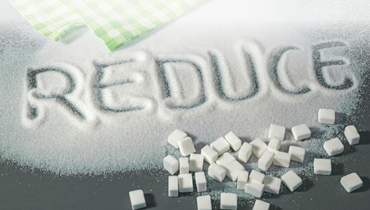
Reducing sugar while maintaining sweetness requires selecting ingredients that deliver taste without compromise. For R&D teams and production managers, the challenge is navigating an expanding landscape of sweetening options, each with distinct properties, benefits, and limitations. Success depends on matching the right sweet ingredient to your specific application and reduction goals.
The Sweet Ingredient Spectrum
Sweet ingredients for reduced-sugar products fall into three main categories, each serving different formulation needs.
High-intensity sweeteners provide extreme sweetness potency – 200 to 600 times sweeter than sugar – allowing dramatic calorie reduction with minimal ingredient addition. Examples include stevia, monk fruit, sucralose, and aspartame. These excel at delivering sweetness but provide no bulk, texture, or functional properties, and most carry some degree of aftertaste challenge.
Bulk sweeteners offer moderate sweetness with sugar-like functionality, used in similar quantities to sugar. This category includes polyols like erythritol and xylitol, as well as crystalline fructose. They maintain texture and mouthfeel while reducing calories, making them valuable for applications where sugar’s structural role matters.
Fiber-based sweeteners contribute moderate sweetness while adding nutritional value through fiber content. Soluble prebiotic fibers like short-chain fructo-oligosaccharides exemplify this category, providing 30% of sugar’s sweetness plus prebiotic health benefits.
Crystalline Fructose: The Sugar-Like Performer
Crystalline fructose stands out among bulk sweeteners for its combination of high sweetness potency and functional similarity to sugar.
Sweetness advantage – With 1.2 to 1.7 times the sweetness of sucrose, depending on application and temperature, crystalline fructose allows you to use 30-40% less sweetener by weight to achieve equivalent sweetness. This translates directly to calorie reduction without compromising taste intensity.
Functional properties – Unlike most sugar alternatives, fructose maintains sugar’s key technical functions: it participates in Maillard browning reactions, providing characteristic golden crusts and aromas in baked goods; exhibits superior freezing point depression, preventing ice crystallization in frozen desserts; demonstrates high solubility without crystallization risk in beverages; and enhances fruit flavors rather than masking them.
Low glycemic impact – Fructose has a glycemic index of 19 compared to sugar’s 65, making it valuable for products targeting diabetic or health-conscious consumers. Unlike high-intensity sweeteners, it provides energy and satiety.
Best applications: Crystalline fructose excels in beverages where its clean taste and high solubility shine, frozen desserts where freezing-point depression is critical, fruit-based products where it enhances rather than competes with fruit flavors, and baked goods where browning and moisture retention matter.
Production considerations – Fructose behaves similarly to sugar in processing, reducing the learning curve for production teams. It’s highly hygroscopic, requiring careful moisture control during storage and handling.
Short-Chain Fructo-Oligosaccharides: The Multifunctional Solution
Sc-FOS represents a different value proposition—moderate sweetness combined with significant health benefits and taste-improvement properties.
Sweetness contribution: At 30% of sugar’s sweetness, sc-FOS requires higher usage levels than high-potency sweeteners but contributes meaningful sweetness while adding fiber.
Synergistic properties – The standout feature is sc-FOS’s ability to improve the taste profiles of high-intensity sweeteners. It masks metallic and bitter aftertastes, allowing greater use of sweeteners like stevia that would otherwise be limited by taste. This synergy enables sugar reductions of 50-70% while maintaining acceptable taste.
Health positioning – Sc-FOS is a scientifically validated prebiotic fiber that supports gut health and immune function. This transforms your product from simply “reduced sugar” to “enriched with prebiotic fiber,” a positive health claim.
Best applications – Sc-FOS works well in beverages where liquid forms integrate easily and viscosity improves mouthfeel, dairy products where prebiotic properties complement existing health positioning, nutritional products targeting health-conscious consumers, and any application combining high-intensity sweeteners where taste masking is valuable.
Production considerations: available in powder (95% fiber) and liquid (85-95% fiber at 72-75% dry solids) forms. Liquid forms simplify handling in wet processes. The ingredient is heat-stable and retains functionality under typical food-processing conditions.
High-Intensity Sweeteners: Maximum Reduction Tools
When calorie reduction is the primary goal, high-intensity sweeteners deliver unmatched efficiency.
Stevia – A natural option derived from stevia plant leaves, offering clean label appeal. Sweetness potency is 200-350 times sugar. The main challenge is a characteristic bitter, licorice-like aftertaste that limits usage levels. Works best in combination with taste-masking ingredients like sc-FOS.
Monk fruit extract – Another natural high-intensity sweetener with 150-250 times sugar’s sweetness. Generally has a cleaner taste profile than stevia but can exhibit slight aftertaste. More expensive than most alternatives but valuable for clean label formulations.
Sucralose – Synthetic sweetener with 600 times sugar’s sweetness and relatively clean taste profile. Heat-stable, making it suitable for baked goods and processed foods. Not suitable for clean-label positioning but effective when cost and taste are priorities.
Best applications – High-intensity sweeteners excel in beverages where they contribute no viscosity or calories, tabletop sweeteners where portion control is simple, and any product where maximum calorie reduction justifies working through taste challenges.
Combination approach – Rarely used alone in commercial products. Most effective when combined with bulk sweeteners or fibers that provide body and mask aftertastes.
Strategic Ingredient Selection
Choosing the right sweet ingredient depends on your specific formulation goals.
For moderate sugar reduction (30-40%) with minimal formulation changes, use crystalline fructose as your primary sweetener. Its higher potency delivers reduction, while its sugar-like functionality minimizes process adjustments and taste challenges.
For maximum sugar reduction (50-70%), combine sc-FOS with high-intensity sweeteners. The fiber provides bulk, masks aftertaste, and contributes moderate sweetness, while the high-intensity sweetener delivers additional sweetness at minimal calories.
For clean label positioning, Crystalline fructose and sc-FOS both derive from natural sources (beet sugar). Combine these with natural high-intensity options like stevia or monk fruit for a fully natural sweetening system.
For fiber-enrichment priority: lead with sc-FOS to achieve fiber claims while reducing sugar. Add crystalline fructose or high-intensity sweeteners as needed to reach the target sweetness.
For cost-sensitive applications, Crystalline fructose offers good cost-effectiveness due to its high sweetness potency, which requires lower usage rates. Synthetic high-intensity sweeteners like sucralose provide maximum calorie reduction at a lower cost than natural alternatives.
Creating Effective Sweetener Blends
The most successful reduced-sugar formulations use ingredient combinations that leverage synergies between sweeteners.
Fructose + sc-FOS blend – Combines fructose’s high potency and sugar-like functionality with fiber’s health benefits and moisture retention. Achieves 40-50% sugar reduction while adding fiber claims. Works across diverse applications from beverages to baked goods.
Sc-FOS + stevia blend – The fiber masks stevia’s bitter aftertaste while contributing its own sweetness and prebiotic benefits. Enables a 60-70% sugar reduction while maintaining acceptable taste quality. Particularly effective in beverages and dairy products.
Fructose + high-intensity sweetener blend – Fructose provides bulk and functional properties while the high-intensity sweetener boosts sweetness. Good balance of functionality and calorie reduction. Useful in applications requiring sugar’s technical properties.
Triple blend approach – For maximum reduction with maintained quality, combine crystalline fructose (for bulk and functionality), sc-FOS (for fiber, taste improvement, and moderate sweetness), and high-intensity sweetener (for additional sweetness). This comprehensive approach addresses sweetness, texture, health benefits, and taste quality simultaneously.
Practical Implementation Guidelines
Start with sweetness targets – Define the sweetness level you need to match your original formulation or target product profile. Use this to calculate sweetener quantities based on each ingredient’s relative sweetness.
Account for synergies: when combining sweeteners, total sweetness may be greater than the sum of individual contributions. Start conservative and adjust upward through testing.
Consider temporal profiles: different sweeteners have different onset speeds and durations. Sugar has a rapid onset and a clean finish. Some high-intensity sweeteners have a delayed onset or lingering sweetness. Blend to create a temporal profile similar to sugar.
Test at production scale – Bench-scale formulations may not fully reveal processing challenges. Validate that your sweetener blend performs consistently at commercial production volumes and speeds.
Validate shelf life – Some sweeteners degrade over time, particularly in acidic or high-moisture environments. Accelerated shelf-life testing confirms that your formulation maintains sweetness throughout the intended shelf life.
Regulatory and Labeling Considerations
Ingredient declarations – High-intensity sweeteners must be declared by specific names. Crystalline fructose appears as “fructose.” Sc-FOS may be listed as “FOS, “fructo-oligosaccharides” or “Oligofructose”.
Sweetener-specific requirements: Some markets require warnings or usage-level limits for certain sweeteners. Polyols may require digestive tolerance statements. Verify compliance in all target markets.
Health claims – Fiber-based sweeteners enable positive fiber claims. Low-glycemic products using fructose may support related messaging, depending on jurisdiction. Work with regulatory experts to maximize claim opportunities.
Making the Right Choice
No single sweet ingredient perfectly replaces sugar in all applications. Success comes from strategic selection based on your product’s specific requirements—the level of sugar reduction needed, functional properties required, health positioning goals, clean label requirements, cost constraints, and target consumer preferences.
Crystalline fructose offers the closest match to sugar’s functionality with significant calorie reduction and low glycemic benefits. Sc-FOS provides unique dual benefits of sweetness and fiber enrichment with valuable taste-improvement properties. High-intensity sweeteners enable maximum calorie reduction when taste challenges can be managed through blending.
The most effective approach for many applications is to combine these ingredients strategically, leveraging each one’s strengths while compensating for its limitations. This creates reduced-sugar products that meet technical requirements while delivering the taste and texture consumers expect.